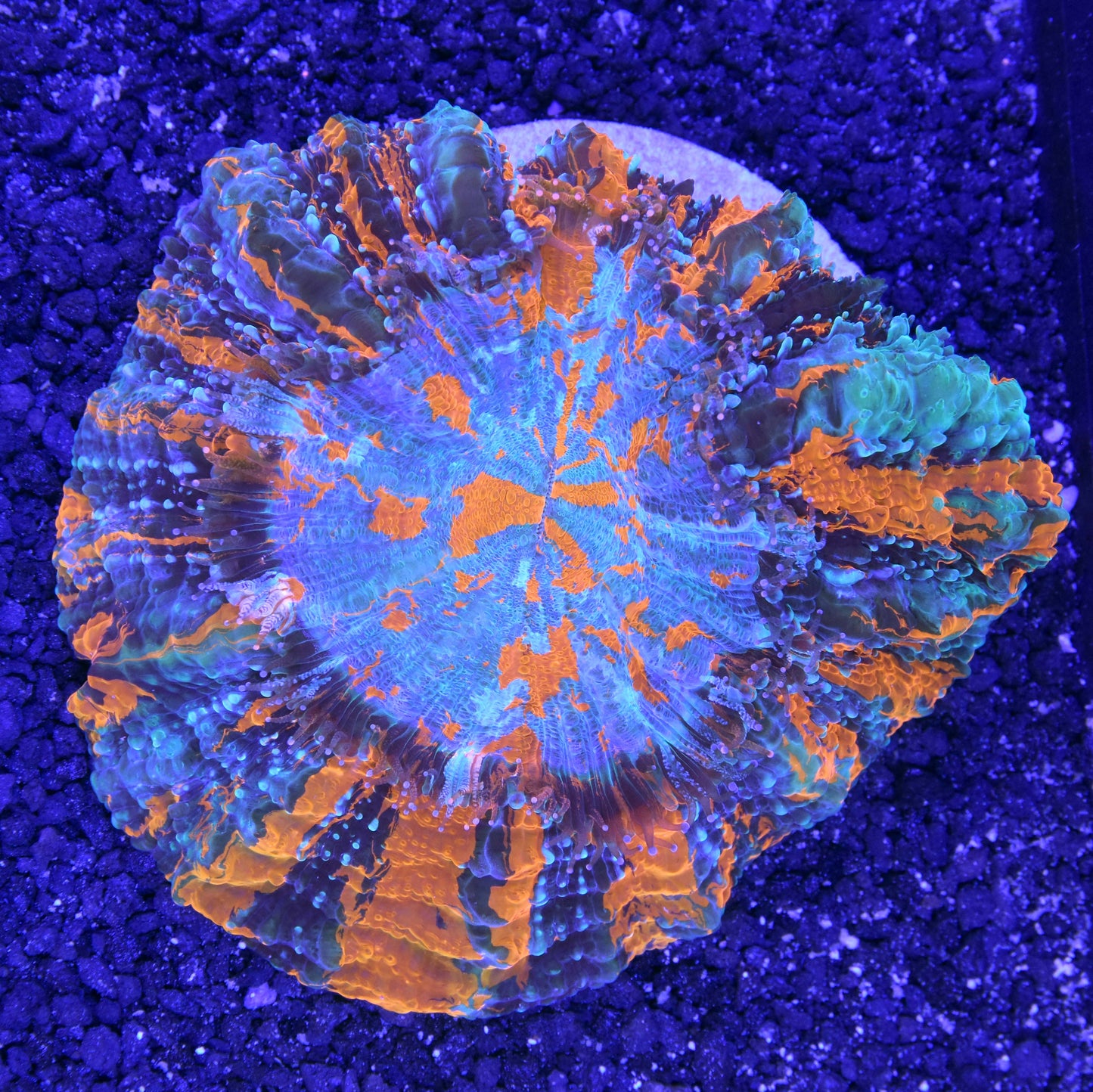

Aquatic Collection Aquarium
Acanthophyllia
Acanthophyllia
Couldn't load pickup availability
Approximate Size: 5x5"
Specifications:
Family: Lobophylliidae
Care Level: Moderate
Lighting: Moderate
Placement: Bottom (Sandbed Preferred)
Temperament: Semi-Aggressive
Water Flow: Low to Moderate
Temperature: 75 - 82° F
Specific Gravity: 1.024 - 1.026
dKH: 8 - 12
pH: 8.1 - 8.4
Supplements: Calcium, Magnesium, Trace Elements
Description:
The Acanthophyllia Coral is one of the most impressive solitary large polyp stony (LPS) corals available in the reef aquarium hobby. Known for its massive, fleshy body and exceptional coloration, Acanthophyllia specimens often display stunning combinations of red, pink, teal, green, orange, and purple that make each coral completely unique. Their inflated tissue, intricate patterns, and oversized appearance make them a natural centerpiece in both mixed reef and LPS-dominated aquariums.
Unlike colonial corals, Acanthophyllia consists of a single, large polyp with one central mouth surrounded by thick, fleshy tissue. During the day, the coral expands into a rounded, dome-like shape, while its feeding tentacles extend primarily in the evening or whenever food is detected in the water. When retracted, the coral displays a smooth, compact profile that contrasts dramatically with its fully expanded appearance.
This coral naturally inhabits sheltered reef slopes and lagoon environments throughout the Indo-Pacific, where it rests on sandy bottoms under moderate lighting and gentle water movement. Replicating these conditions in the home aquarium will encourage full expansion, vibrant coloration, and long-term health.
Acanthophyllia performs best under moderate lighting. While it depends on symbiotic zooxanthellae for much of its energy, excessive light can cause the tissue to fade or become stressed. Moderate LED, T5, or comparable reef lighting provides the ideal balance for maintaining healthy tissue and bringing out the coral's natural coloration. As with most LPS corals, gradual acclimation is recommended whenever introducing the coral to brighter lighting.
Low to moderate, indirect water flow is ideal. Gentle movement helps deliver nutrients while preventing detritus from settling around the coral without causing its fleshy tissue to fold or tear. Excessively strong flow can prevent the coral from fully expanding and may lead to tissue damage over time.
Although photosynthesis supplies much of its nutritional needs, Acanthophyllia responds exceptionally well to supplemental feeding. Offering small meaty foods such as mysis shrimp, enriched brine shrimp, finely chopped seafood, or other LPS-specific foods once or twice each week can significantly improve growth, tissue fullness, and coloration. Feeding is most effective after the lights dim, when feeding tentacles are naturally extended.
Despite its generally calm appearance, Acanthophyllia should be considered semi-aggressive. It can extend feeding and defensive tentacles capable of irritating nearby corals, particularly when space is limited. Providing several inches of clearance around the colony will help prevent unwanted interactions and allow the coral to expand naturally without contacting neighboring specimens.
Stable water chemistry is essential for maintaining this coral's thick tissue and underlying skeleton. Consistent calcium, alkalinity, and magnesium levels support healthy skeletal development, while regular supplementation of trace elements helps maintain long-term coloration and vitality. Like many premium LPS corals, Acanthophyllia reacts poorly to sudden swings in water quality, making consistency one of the most important aspects of its care.
Acanthophyllia is a relatively slow-growing species, but with proper care it can become an impressive showpiece over time. Most specimens are sold as individual corals rather than colonies, making each one a unique addition to the aquarium. Placed on a stable sandbed with moderate light, gentle flow, and routine feeding, the Acanthophyllia Coral will reward hobbyists with remarkable size, vibrant colors, and a commanding presence that few other corals can match.
Share